




The highlights of this issue: Sweden's Defence Materiel Administration (FMV) and Teledyne completed Baltic Sea condition trials of Slocum-series underwater gliders off Gotland, with passive acoustic detection and underwater communication links as the focus of validation; on November 16 the U.S. District Court for the District of Hawaii ruled that the National Marine Fisheries Service violated the Endangered Species Act when approving a seabed mineral lease sale off American Samoa, while the first lease sale went ahead on November 20 — resource advancement and judicial review of deep-sea mining are now running in parallel; Guangzhou Marine Laboratory published in Geology the identification of a roughly 7% porosity transition threshold that switches rare-earth uptake mechanisms in deep-sea bioapatite; a PLOS One study compiling more than 500,000 high-frequency measurements across four continents shows that warming amplifies the diel swings of dissolved oxygen and acidity in coastal waters; the Ministry of Natural Resources' Report on the Development of China's Marine Drugs and Functional Products Industry 2026 shows China ranks first globally in marine natural product discoveries with an industry added value of 99.6 billion yuan; and Cyclone Akvan made landfall on India's east coast around midday on November 20.
1. Unmanned platforms: Baltic Sea drills push glider passive acoustic detection toward service-level evaluation
According to Ocean News & Technology, in early November Sweden's Defence Materiel Administration (FMV) and Teledyne jointly demonstrated underwater gliders off Gotland: two platforms, the Slocum G3S and the Slocum Sentinel, were launched in turn, and after several days of testing the results were presented to the Swedish Navy and to international visitors from Denmark, the Netherlands, the United Kingdom and Germany. Gliders move up and down by changing their buoyancy, with small wings converting vertical motion into forward travel; they run on low energy with long endurance, remaining at sea from several weeks to more than 18 months and operating to depths of up to 1,000 metres depending on model and configuration. The focus of this demonstration was passive acoustic detection using hydrophones and a towed array sonar (TAS) — the platforms emit no sound of their own and only 'listen' below the surface. (Source: Ocean News & Technology)
FMV marine sensor systems engineers said that during the tests the platforms succeeded in detecting a target vessel and transferring the information to a surface ship via underwater communication. FMV noted the demonstration gave the Swedish Armed Forces a chance to assess the technology's potential under genuine Baltic Sea conditions such as limited water depths; the international participation also reflects that underwater surveillance and information gathering are engaging more stakeholders around the Baltic Sea and within NATO. (Source: Ocean News & Technology (compiled from public information))
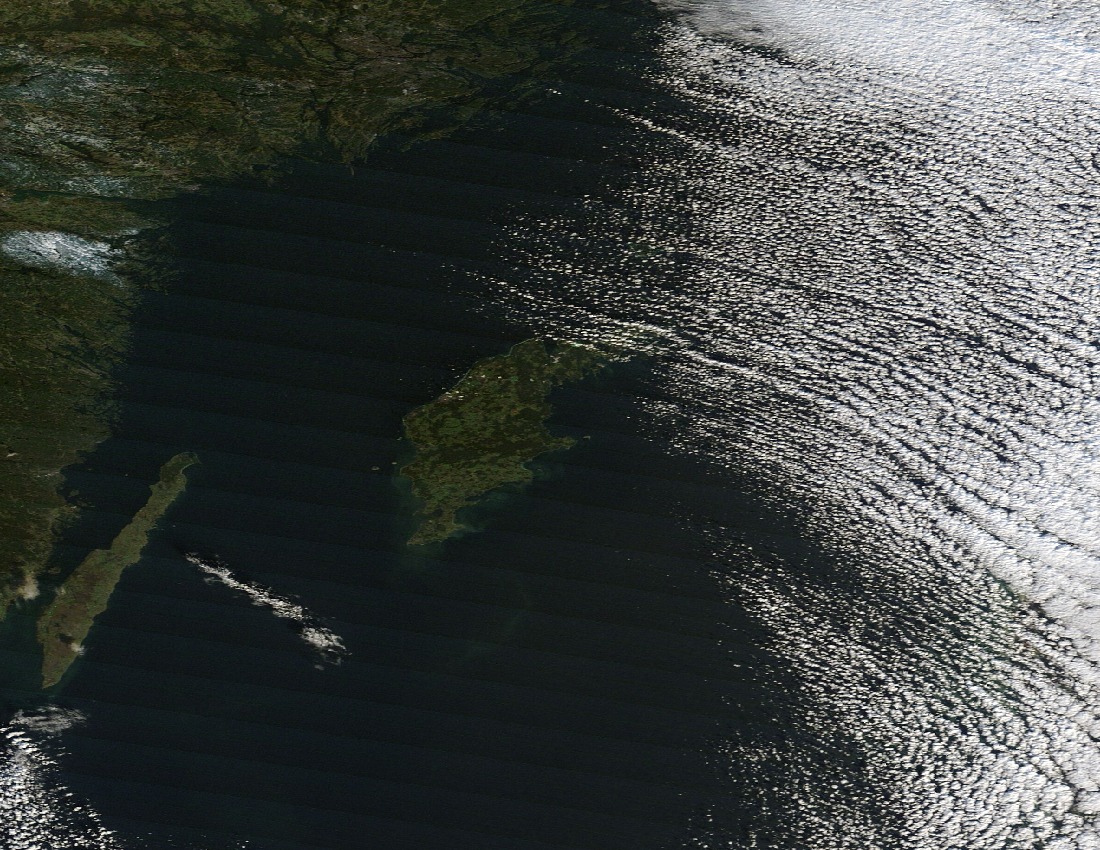
Source: NASA Worldview (MODIS Terra, U.S. government work, public domain)
2. Deep-sea minerals: first U.S. offshore critical-minerals lease sale proceeds as a judicial ruling lands in the same week
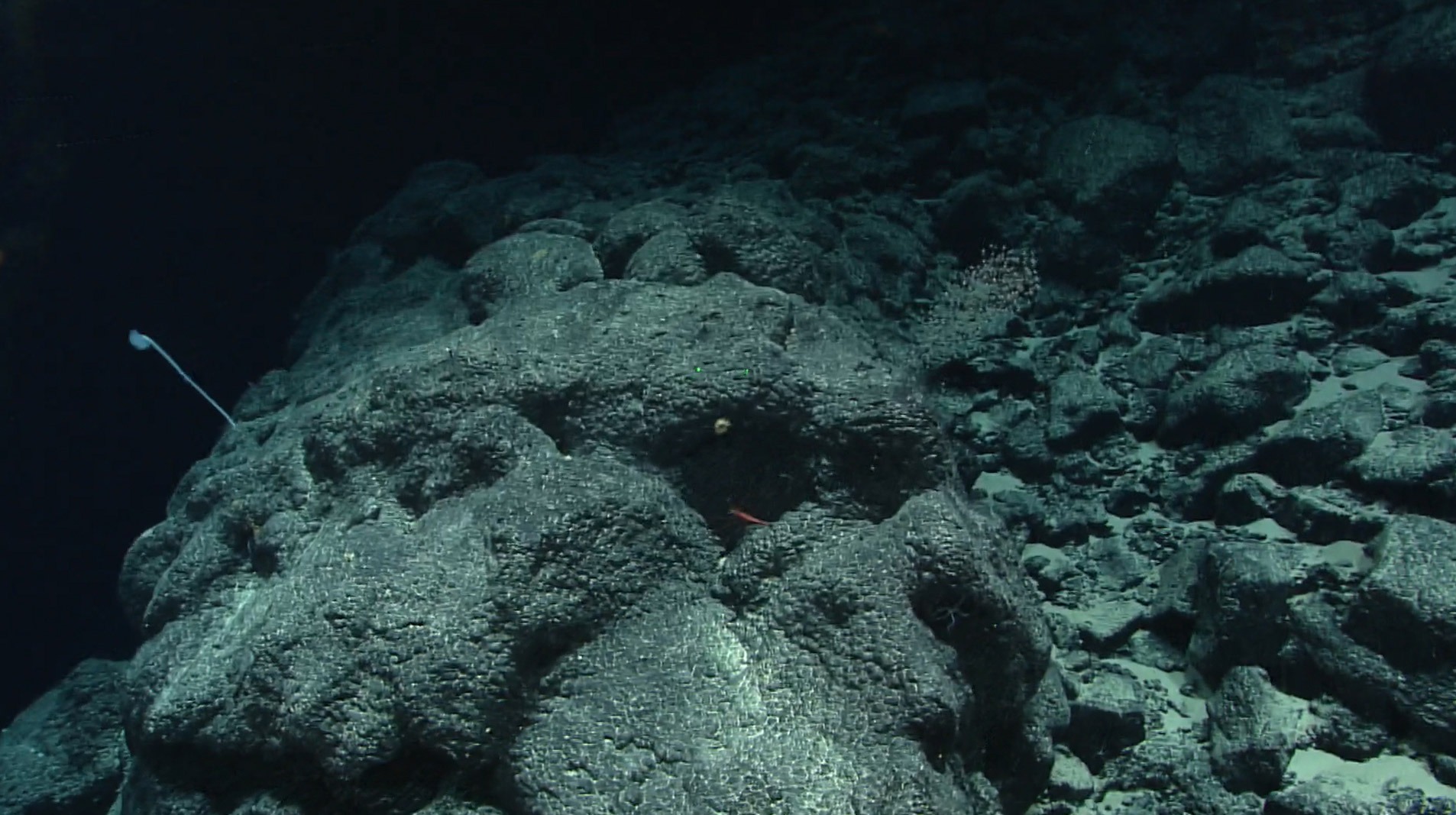
According to The New York Times and other outlets, on November 16 Judge Jill Otake of the U.S. District Court for the District of Hawaii ruled that the National Marine Fisheries Service, in approving a seabed mineral lease sale covering roughly 31 million acres (about 126,000 square kilometres) off American Samoa, 'did not even attempt to consider' the potential harms of deep-sea mining to endangered species such as blue whales and sea turtles, violating the Endangered Species Act; the agency's 'not likely to adversely affect' determination was therefore voided. The environmental law firm Earthjustice, which filed the suit in August, argued the government's approach was an attempt to avoid examining and disclosing the effects of seabed mining. (Source: The New York Times)
Although the ruling came early in the week, the first-of-its-kind U.S. offshore critical-minerals lease sale went ahead outside Los Angeles on November 20. Developments clustered in the same days: on November 16 NOAA held a hearing on Eco Minerals Inc.'s application for exploration licences covering about 148,000 square kilometres of Pacific seabed — eight areas of the Clarion-Clipperton Zone plus an international-waters area between Guam and Wake Island; and after testifying, Guam Senator William Parkinson said he would petition the incoming Congress to halt Pacific seabed leasing and licensing until environmental and international legal concerns are addressed. 'Resource advancement' and 'environmental review' of deep-sea minerals are now running on the same timeline. (Source: The New York Times, Ocean Mining Intel, PACNEWS)
Source: NOAA Ocean Exploration, 2026 American Samoa ROV + Mapping Exploration (U.S. government work, public domain)
3. Deep-sea science: a ~7% porosity threshold as a 'switch' in deep-sea rare-earth enrichment
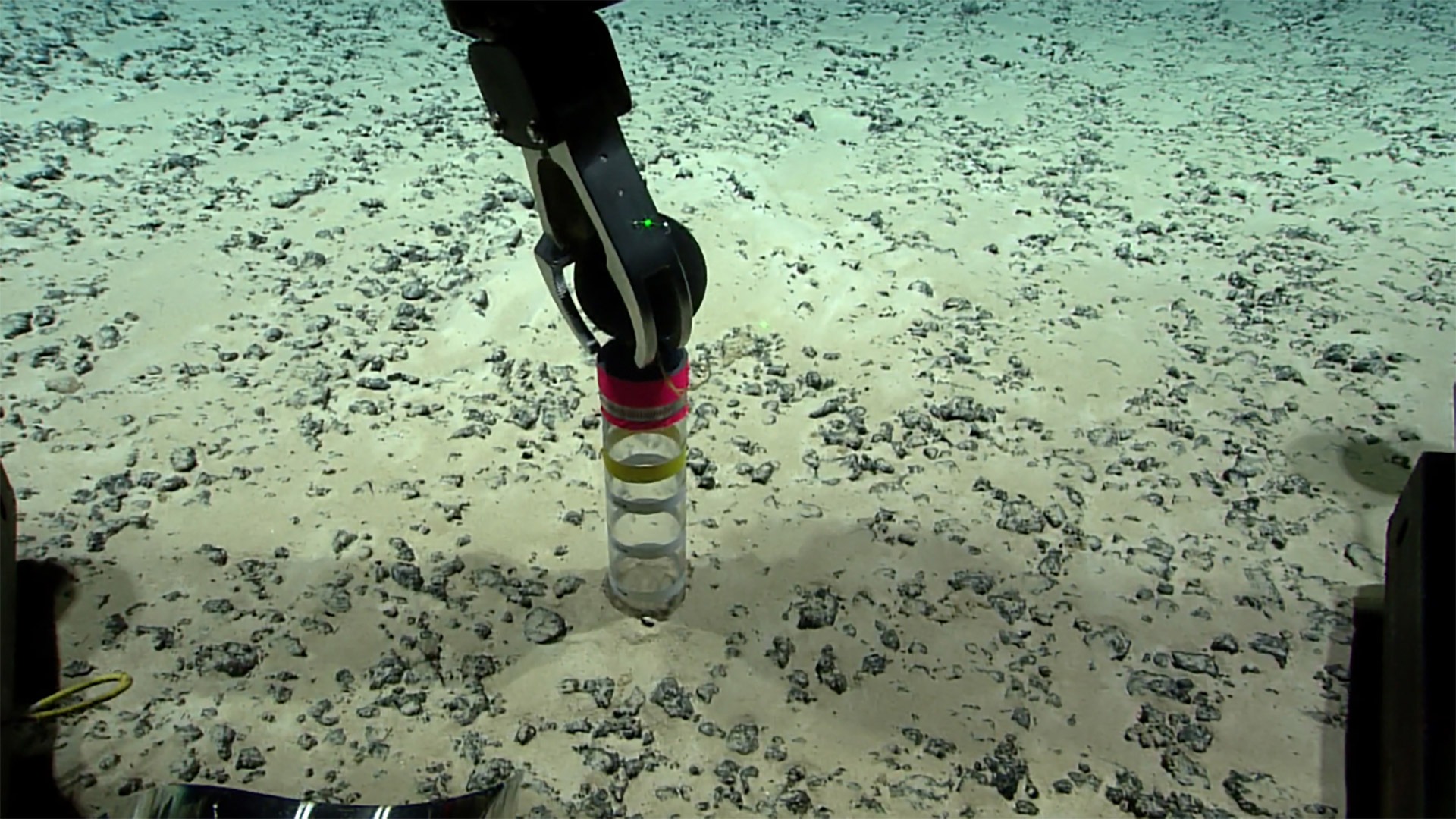
According to a November 20 release by Guangzhou Marine Laboratory, researchers including Qiang Ma, Shengping Qian and Yi-Gang Xu published in Geology the first account of deep-sea rare-earth enrichment from the perspective of mineral microstructure: the study identifies a repeatable porosity transition threshold of about 7% across multiple sea areas, where differences in mineral porosity switch the rare-earth uptake mechanisms of deep-sea bioapatite (such as fossil fish teeth). The work links micro-scale pore structure, rare-earth partitioning behaviour and the interpretation of paleoenvironmental proxies, and proposes a new approach to assessing the reliability of fish-tooth rare-earth records based on porosity. (Source: Guangzhou Marine Laboratory)
Deep-sea rare earths are a frontier of marine resource research: bioapatite in deep-sea sediments is both a carrier of rare-earth enrichment and a recorder of paleoenvironmental change. The study suggests that porosity — a seemingly ordinary microstructural parameter — may be the key variable determining the pathway of rare-earth enrichment in deep-sea bioapatite, providing a quantifiable structural parameter and a new theoretical framework for understanding deep-sea rare-earth enrichment and for assessing the reliability of rare-earth paleoenvironmental proxies. (Source: Guangzhou Marine Laboratory (compiled from public information))
Source: NOAA Ocean Exploration, 2026 American Samoa ROV + Mapping Exploration (U.S. government work, public domain)
4. Coastal observation: 500,000 high-frequency records reveal warming widens diel swings of oxygen and acidity
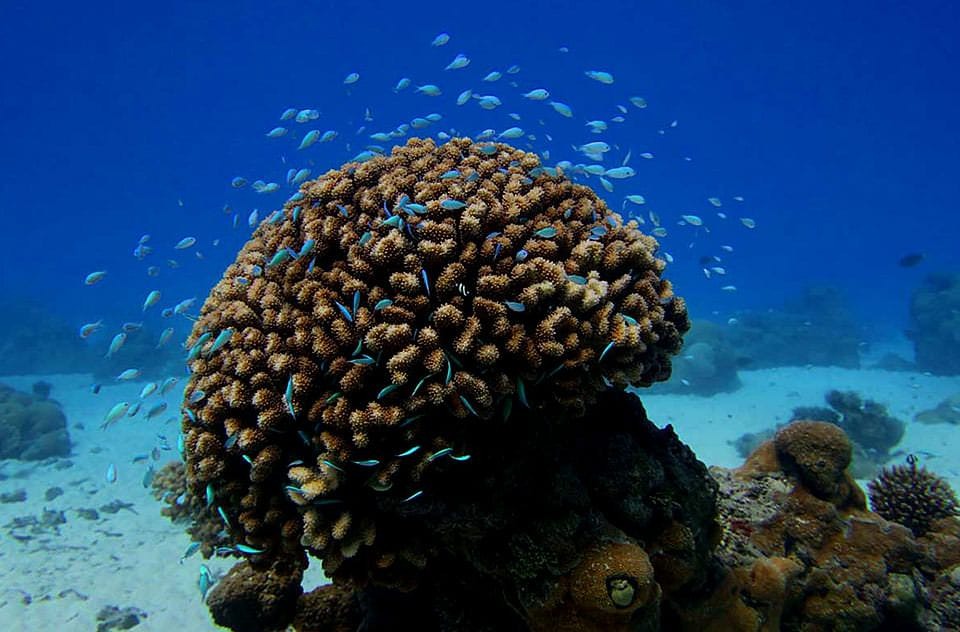
According to a study published in PLOS One on November 20, Steckbauer and colleagues compiled more than 500,000 high-frequency measurements from seven coastal environments across four continents — seagrass meadows, mangrove forests, coral reefs, kelp beds and macroalgal stands — with observation periods from several weeks to over a year. Mean water temperature across the study sites reached 28.5 °C, with extremes spanning 1.15 °C in Greenland algal mats to 39.15 °C in Red Sea mangroves; dissolved oxygen averaged 93% saturation, with swings from a near-anoxic 0.4% to 442% supersaturation on a Red Sea coral reef. (Source: PLOS One; science media coverage)
The study shows the diel fluctuations of oxygen and pH are tightly coupled and strongly temperature-dependent: cold polar waters, with lower metabolic rates, stay muted, while above 25 °C the diel oxygen range widens markedly in coastal habitats — daytime photosynthesis can push waters above 150% supersaturation, while intensified nighttime respiration drives oxygen into hypoxic territory. The daytime 'hyperoxia' once thought to buffer thermal stress is increasingly offset by worsening nocturnal hypoxia. The authors note that evaluating deoxygenation and acidification in isolation risks underestimating combined biological impacts in shallow coastal waters, and that satellites cannot capture hour-scale metabolic swings, making high-frequency in-situ monitoring and baseline surveys indispensable. (Source: PLOS One (compiled from public information))
Source: NOAA (U.S. government work, public domain)
5. Marine bio-economy: first in the world for natural product discoveries, industry added value near 100 billion yuan
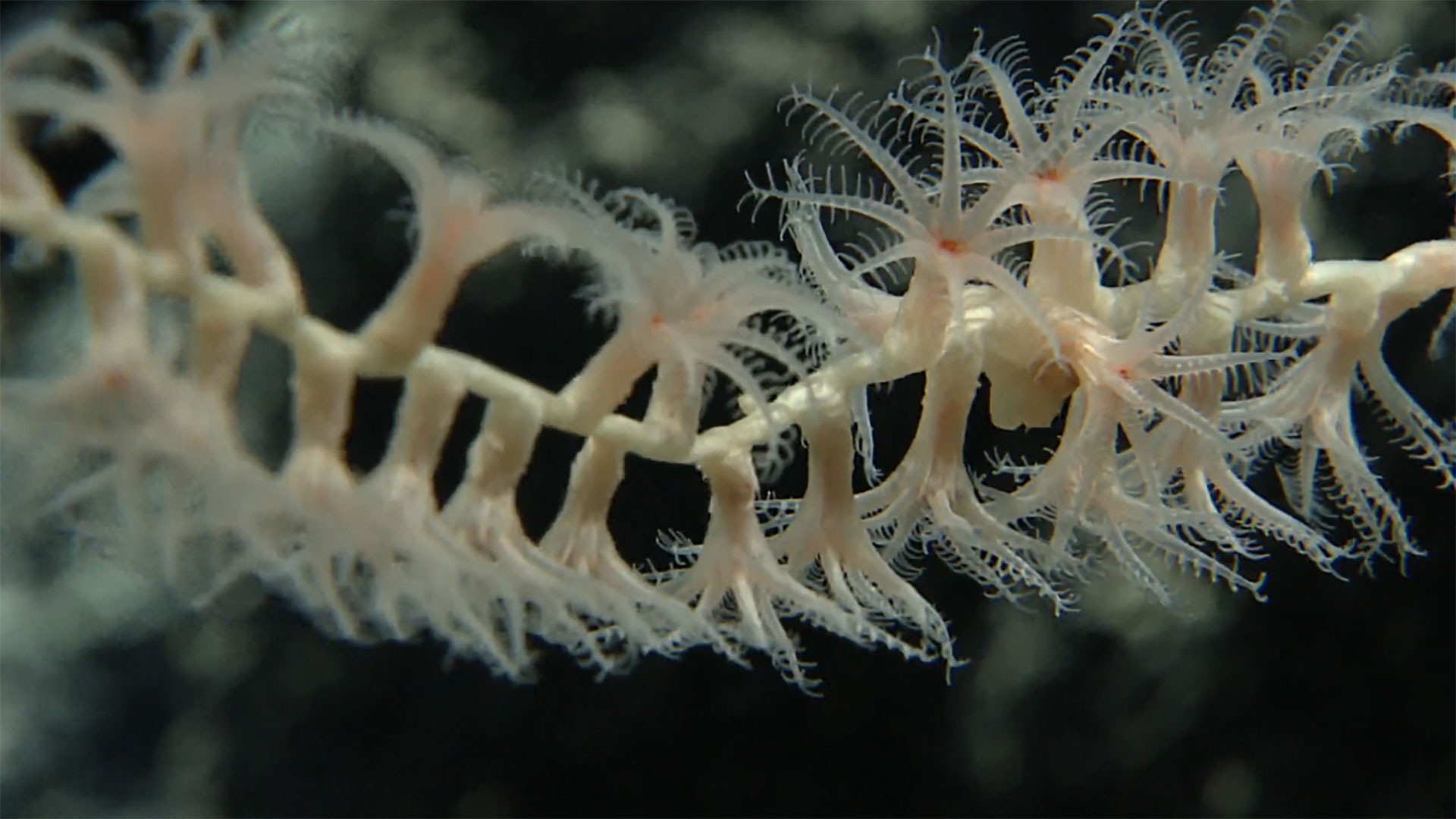
According to People's Daily Overseas Edition on November 21, China's Ministry of Natural Resources recently released the Report on the Development of China's Marine Drugs and Functional Products Industry 2026: the industry's added value grew from just over 30 billion yuan in 2012 to 99.6 billion yuan in 2025, a 40% increase during the 14th Five-Year Plan period, with 2025 growing 6.1% year on year at constant prices. By the end of 2025 the industry had formed a pattern led by the eastern areas of three major marine economic circles, with the north and south following. (Source: People's Daily Overseas Edition)
The report shows China ranks first globally in marine natural product discoveries, with marine microbial strain preservation scale and diversity among the world's leading levels and the world's largest hadal organism database built; AI-assisted drug screening is more than a hundred times more efficient than traditional approaches; eight Class 1 new drugs sourced from marine organisms have received implied clinical trial approvals, several raw materials dominate global supply, and a batch of specialty products occupy the high end of the value chain. On resources, exploration and preservation capabilities for deep-sea and polar marine biological resources continue to improve; the core raw-material capacity of China's marine biomanufacturing products ranks among the top internationally, with applications extending into medical materials, enzymes and agricultural products. (Source: People's Daily Overseas Edition (compiled from public information))
Source: NOAA Ocean Exploration, 2026 American Samoa ROV + Mapping Exploration (U.S. government work, public domain)
6. Tropical cyclones: Akvan makes landfall on India's east coast
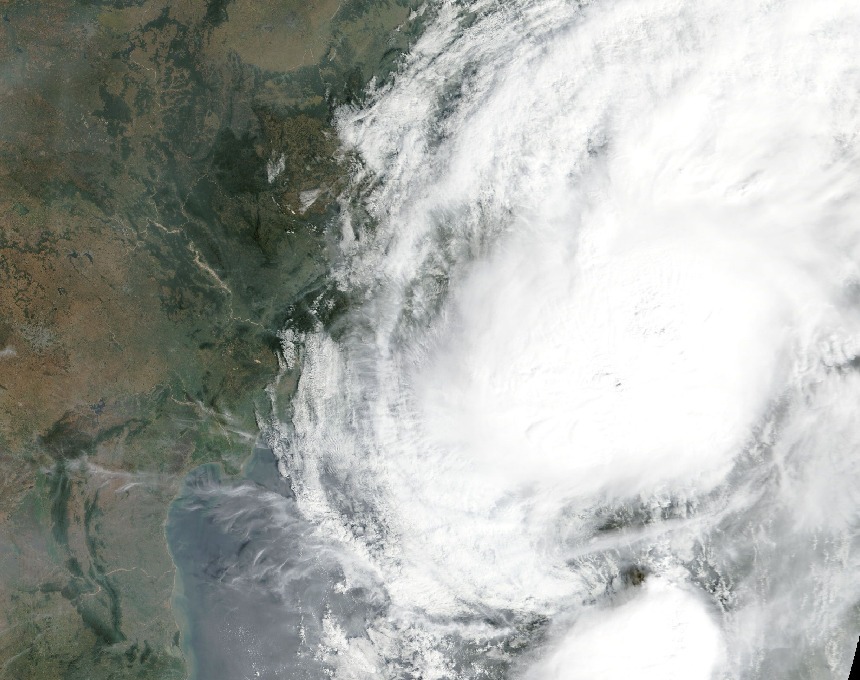
According to the global tropical cyclone bulletin of the National Meteorological Centre of the China Meteorological Administration, Cyclone Akvan over the Bay of Bengal made landfall near the border of Andhra Pradesh and Odisha around midday on November 20, with maximum winds near the centre of force 8 (18 m/s, equivalent to a tropical storm) and a minimum central pressure of 1000 hPa. The bulletin forecasts heavy to torrential rain from November 20 to 23 across coastal northeastern Andhra Pradesh, Odisha, eastern Chhattisgarh, Jharkhand, West Bengal, Bihar and Bangladesh, with some areas expecting extremely heavy rain of 200-280 mm. (Source: National Meteorological Centre (CMA))
Source: NASA Worldview (MODIS Terra, U.S. government work, public domain)
This Issue in Perspective
Across this issue's developments: unmanned platforms are entering service-level evaluation in constrained seas such as the Baltic, with passive acoustic detection and underwater communication as the focus of capability validation; U.S. deep-sea minerals saw a first lease sale proceed in the same week as a judicial ruling, with environmental review now a focal point of the development process; a ~7% mineral porosity threshold provides a quantifiable structural parameter for deep-sea rare-earth enrichment; more than 500,000 high-frequency records across four continents show coastal oxygen and acidity diel swings widening as water warms, underscoring the value of high-frequency in-situ chemical monitoring; the marine drugs industry report shows natural-product cataloguing, hadal organism databases and AI screening moving marine biological resources from discovery toward industrialisation; and the early-winter Bay of Bengal storm is a further reminder of the standing need for North Indian Ocean cyclone-season monitoring and early warning.
Source note: This article is compiled from public reporting by Ocean News & Technology, The New York Times, Ocean Mining Intel, PACNEWS, the Guangzhou Marine Laboratory website, PLOS One and related science media, People's Daily Overseas Edition, and the National Meteorological Centre's global tropical cyclone bulletins; commentary is editorial observation and for reference only. Figures 1 and 6 are NASA Worldview satellite images; Figures 2, 3 and 5 are NOAA Ocean Exploration works; Figure 4 is a NOAA work — all are U.S. government works in the public domain with original sources credited. For announcements and papers, please refer to the original releases.